

Start communicating
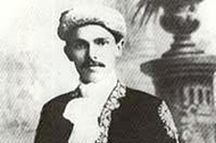
Quaid-e-Azam
Recent Village Updates

Login to find out
has added a new journal"Pakistan's Literacy Rate = 35%."
" Reason - most children don't get a chance to study & are forced to work by their family.
ZINDAGI takes such children to schools, and pays them Rs. 20/- to attend a class; as a compensation for what they would earn otherwise. Every child gets a chance to gain something from life, and a platform to grow.
************* HELP US HELP PAKISTAN *************
VOLUNTEER and/or DONATE to make better people out of these children, so that they can help make a better PAKISTAN.
For further information: "www.zindagitrust.org." www.zindagitrust.org

pretty_paki
I know this is not a place to promote such organizations butstill i wanted to help and encourage disadvantaged kids quit
working or begging, and instead, attend school and college.
We SHOULD Promote this organization by talking about it with our
friends and families.
Ramzan are also here, we can even give zakat to Zindagi Trust :)


Login to find out
has added a new journalThe Jinnah movie by Akbar Ahmed and Jamil Dehlavi is out on DVD now. I bought a copy, the print is good but for some reason the quality of the film itself seems poor. Anyway, I had the privilege of working on that movie in 1997 and it was really a great experience! Have any of you seen it and do you have any comments on it? Perhaps it would be nice to try and get copies of it distributed to interested parties in the US - like university and college Pakistan students associations etc.

buzzaz
I hadn't realized how dead this village was.. Oh well.. so long, silent villagers..buzzaz
I like the mother of the nation, or the role that was played for it. I felt that was very appropriately done, even though it was too little.. And yeah, it is on Amazon/eBay?
Labs
I agree.. the flashback / computer record library aspect of it was a bit strange.. but the acting, script and production were awesome.. don't think it was properly released in the UK though...so many here wouldn't have seen it
Login to find out
has added a new journalFrom the Indian express... here is the www.indianexpress.com
In an Earlier League
We will have come to terms with our history when we can honestly reckon with figures like Jinnah, argues Pratap Bhanu Mehta
Of all the figures of the nationalist movement who had a decisive influence on shaping the destiny of the subcontinent, Jinnah remains amongst the most enigmatic and least understood. A brilliant lawyer and legislator, he often found himself in political negotiations whose outcome he could not control. By modern standards a resolute liberal and secularist, he laid the foundations of a state that has found it difficult to transcend its religious identity. He was, as Nehru described him, an elitist, but one with great concern for extending the franchise. He was instrumental in creating a sense of corporate identity amongst Muslims, yet he dissociated himself from theology and the Khilafat. He had obvious disdain for Gandhi, yet got along well with Tilak whom he so ably defended. He once defined Swaraj as Hindu-Muslim unity. He changed his position on separate electorates many times and ultimately founded a state that represented both his triumph and his defeat.
Ian Wells gives an account of Jinnah?s politics up till the 1930s, before he became associated with the idea of Pakistan. He clearly charts the trajectory of Jinnah?s early political career describing him as a liberal constitutionalist of sorts, a disciple of Morely in political philosophy and Gokhale in political strategy. Wells does not dwell much on Jinnah?s later ideas. His rendering of Jinnah?s early career will shed little light on the vexed question of what exactly Jinnah was all about during the 1940s. Did Jinnah want unified representation for Muslims, within a loose Indian union as Jalal controversially claimed? Or had his position become sufficiently radical to brook no other alternative than Partition?
If Wells is correct then this is perhaps the wrong question to ask. Too much of Indian history is written backwards. It takes outcomes for granted and then tries to figure out who was responsible. But perhaps we need to open up new vistas in the intellectual history of the period. It is more accurate to say that all the major figures of the period, Gandhi, Jinnah, Ambedkar, Nehru, and Savarkar, had strong convictions. But few of them had any clear idea of what the grand experiment they were undertaking would look like. They were constantly improvising positions in light of events and changing circumstances. And the final political outcomes often exceeded the power and grasp of any single one of them. To read through even Well?s simplistic narrative is to be reminded of how vexed the question of Muslim representation was from the early part of the 20th century. Once it was admitted that deviation from one person one vote was warranted for the protection of the interests of minorities, the question became: what counts as adequate protection? One-third or one-fourth guaranteed representation at the Centre? Veto power for minorities at the Centre? The truth is there never was any real stable answer. Any position was liable to create a political backlash. One-third reservation and some Hindus would argue that too much had been given away. One-fourth and some Muslims would argue that too little had been secured. The backlash to any position would in turn generate a further backlash. The Hindu Mahasabha?s reaction to Jinnah?s proposals seems gradually to have radicalised him, in turn unleashing another round of reactions. This vicious circle found its ultimate denouement in Partition, an outcome nobody apparently wanted, but no one could prevent.
Even though Wells? book does not add too much to our existing stock of knowledge about Jinnah, it is useful to read Jinnah?s early politics without the final result clearly in view. He gives a clear account of some crucial episodes in the evolution of Jinnah?s politics: Khilafat, Minto-Morley Reform, Poona Pact, the rise of Gandhi. Wells ought to have placed Jinnah?s changing positions in a wider political context. There are glaring omissions. For instance, Wells scarcely discusses Jinnah?s defence of Tilak, and much more could have been said on how Hindu- Muslim relations were constituted in the period he discusses.
But the book will help readers get past the stern looks and encrusted reputation that, amongst other things, makes Jinnah so unapproachable to most Indians. It presents a Jinnah who is neither an opportunist, nor a fanatic, but a leader negotiating his way through changes in politics that were not easy to fathom. It is fair to say that we will have come to terms with our history, not when we understand figures like Gandhi and Nehru, but when we can honestly reckon with figures like Jinnah and perhaps Savarkar. In Jinnah?s case in particular the shadow he cast on Indian history is immeasurably more complicated than our simplistic depictions of him allow us to acknowledge. At least Wells had reminded us of how much we still don?t understand about the key figures of modern Indian history.