

Start communicating
Salaat
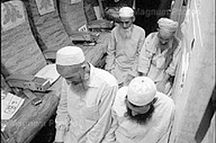
This village is devoted to the most basic aspect of worship: salaat.
Allah tells us the purpose of life in the Qur'an (translated): I created the Jinn and Mankind only that they should worship Me.
He also commands us (translated): Guard strictly your (habit of) prayers, especially the Middle Prayer; and stand before Allah in a devout (frame of mind).
We can all use encouragment in applying Islam to our daily lives. InshaAllah this village will offer a place for us to share knowledge and encourage each other to establish and guard our prayers in order to fulfill our purpose in life.
(If you are joining, please answer the questions in English. Thanks :-) )
Recent Village Updates

Login to find out
has added a new journalWhat are the fruits and benefits of the Ascension?
The Answer: We shall mention only five, by way of example, of the more than five hundred fruits of the Ascension, which has the meaning of the Tree of Tuba.
FIRST FRUIT
This Fruit has brought to the universe and mankind a treasury and a gift of pre-eternal and post-eternal Light that is to see with the eyes the truths of the pillars of belief and to behold with the eyes the angels, Paradise, the hereafter, and even the All-Glorious One. It raises the universe from an imaginary state of being wretched, transitory, and disordered and, through that Light and fruit, shows its reality, which is its being sacred missives of the Eternally Besought One and a beautiful mirror to the beauty of Divine Oneness. It has made happy and pleased the universe and all conscious beings.
Furthermore, through this Light and fruit, it shows that man is not merely bewildered, wretched, impotent, impoverished, with endless needs and innumerable enemies, ephemeral and impermanent, which is like the state of misguidance, but, rather, through that Light and sacred fruit, it shows man in his true form of being a miracle of the Eternally Besought One's power in the Most Excellent of Patterns, a comprehensive copy of the letters of the Eternally Besought One, an addressee of the Pre-Eternal and Post-Eternal Monarch, a special bondsman, the admirer and friend of His perfections, the lover bewildered at His beauty, and a beloved guest appointed to eternal Paradise. It has given all human beings who are true human beings infinite joy and infinite longing.
SECOND FRUIT
This fruit has brought to jinn and man as a gift the fundamentals of Islam, and first and foremost the prescribed prayers, which constitute those things pleasing to the Sustainer, the Ruler of Pre-Eternity and Post-Eternity, Who is the Maker of beings, Owner of the universe, and Sustainer of all the worlds. Discovering the things that please Him is so engaging and brings such happiness that it cannot be described. For how eager is everyone to find out, from a distance, the desires of a powerful benefactor or generous king, and if they find out, how delighted they are. They say longingly: "If only there was some means of communication so that I could speak with that personage directly. If only I could learn what he wants of me. If only I knew what would please him that I could do."
And so let man understand just how necessary it is to be desirous and eager to discover the wishes and pleasure of the Ruler of Pre-Eternity and Post-Eternity. For all beings are in the grasp of His power, and the beauty and perfections to be found in all beings are but a pale shadow in relation to His beauty and perfection, and every instant, man, who is needy for Him in innumerable ways, receives countless numbers of His bounties.
Thus, Muhammed (PBUH), as a direct fruit of the Ascension, heard with utter certainty what it is that pleases the Monarch of Pre-Eternity and Post-Eternity, Who is behind seventy thousand veils, and returning, brought it as a gift to mankind.
Indeed, how curious is man to learn the conditions on the moon. If someone was to go there and return bringing news of it, both what self-sacrifice he would display, and, if he was to understand the conditions there, how he would be overcome by wonder and curiosity. But the moon is touring in the domain of a Lord of such dominion that it encircles the globe of the earth like a fly. And the globe of the earth flies round the sun like a moth. While the sun is one lamp among thousands and acts as a candle in a guest-house of that Glorious Lord of All Dominion.
Thus, Muhammed (PBUH) saw the works and wonders of art and treasuries of mercy in the everlasting realm of an All-Glorious One such as this, and returned and informed mankind. And so, if mankind does not listen to this person with utter wonder, curiosity, and love, you can understand just how contrary to reason and wisdom is their attitude.
THIRD FRUIT
Muhammed (PBUH) saw the treasury of eternal happiness, obtained the key, and brought it as a gift to jinn and men. Indeed, by means of the Ascension, he saw Paradise with his own eyes and witnessed the eternal manifestations of the All-Glorious and Merciful One's mercy; he understood eternal happiness with absolute and utter certainty and brought as a gift to jinn and men the good news of its existence.
And so, if wretched jinn and men imagine themselves and all beings to be in the soul-searing situation of an unstable world amid the upheavals of decease and separation being poured with the flood of time and motion of particles into the seas of non-existence and eternal separation, it cannot be described just how precious and enheartening is such good news in the ears of ephemeral jinn and men, who thus supposed themselves to be condemned to eternal annihilation. If, at the moment he is to be executed and sent to non-existence, a man is pardoned and given a palace in proximity to the king, just how much joy it causes him. So, gather up all such joy and happiness to the number of jinn and men and then evaluate this good news.
FOURTH FRUIT
Just as he himself sampled the fruit of the vision of Divine beauty, so did he also bring to jinn and men the gift of this fruit being attainable by all believers. You may understand from the following how delightful, pleasing, and exquisite a fruit this is.
Everyone of fine perception loves one who possesses beauty and perfection and is benevolent. And that love increases in relation to the degrees of beauty, perfection, and benevolence; it reaches the degree of worship and ends up at a love that would sacrifice its own life. On seeing such a one only once, that love rises to the level at which it would sacrifice the world.
However, in relation to the beauty, perfection, and benevolence of God Almighty, the beauty, perfection and benevolence in all beings are not even like a few tiny sparks in relation to the sun. That is to say, if you are a true human being, you may understand how delightful and fine a fruit it is and what happiness and joy it brings to attain in eternal happiness to the vision of the All-Glorious One of Perfection, Who is worthy of boundless love, infinite longing, and being gazed upon eternally.
FIFTH FRUIT
Man's being the precious fruit of the universe and the petted beloved of the Maker of the universe was understood through the Ascension, and he brought this fruit to jinn and men. This fruit raises man, who is an insignificant creature, a weak animal, an impotent conscious being, to a rank so elevated it confers on him a rank of pride above all the beings in the universe. It gives man indescribable pleasure and joyful happiness. For if it is said to an ordinary private: "You have been promoted to the rank of field-marshal," how delighted he will be. But wretched man is an ephemeral, impotent 'rational animal' who constantly suffers the blows of decease and separation. So, if he is told that not only will he be able to make excursions and tours with the speed of imagination and breadth of the spirit in an eternal never-ending Paradise within the mercy of an All-Compassionate and Generous Merciful One, and journey with the mind in accordance with all the desires of the heart in both the outer dimensions of things and those dimensions that look directly to their Creator, but that he will also attain to the vision of Divine beauty in eternal happiness, you can imagine what a profound joy and true happiness a human being who has not fallen from the level of humanity would feel in his heart.
Now we say to our listener: "Tear off the shirt of atheism and throw it away! Listen with believing ears! Look with Muslim eyes! We shall show you through two short comparisons the great value in one or two further fruits.
For example, you and I are together in a certain country. We see that everything is hostile to us and to each other, and is strange to us. Everywhere is full of ghastly corpses. The sounds to be heard are the weeping of orphans and the lamentations of the oppressed. And so, if someone comes when we are in such a situation and brings some good news from the king of that country through which those of his subjects who were strange to us assume the form of friends and those who were enemies turn into brothers, and the ghastly corpses are each seen to be worshipping, and praising and glorifying in deep humility and submission; and if that piteous weeping becomes like extolling and cries of "Long live the king!", and those deaths and plunder and pillage are transformed into demobilizations and release from duty; and if we join the joy of everyone else together with our own joy, then, most certainly, you will understand how joyful and happy that news is.
Thus, when the beings of the universe are looked at with the eye of misguidance, as they were before the light of belief, which is one fruit of the Ascension of Muhammed (PBUH), each is seen to be a strange, menacing, troublesome, dreadful, terrifying corpse the size of a mountain, and the appointed hour severing the head of each person and casting him into the pit of eternal, never-ending nothingness. And while misguidance interprets all voices as being lamentations occasioned by separation and decease, the truths of the pillars of belief, which are fruits of the Ascension, show you that just as beings are brothers and friends to you and praisers and glorifiers of the All-Glorious One, so also is death and decease a sort of demobilization and release from duty, and in reality those voices each glorification of God. If you wish to consider this truth in its entirety, then study the Second and Eighth Words.
The Second Comparison: You and I are in a place resembling a vast desert. There is a sand-storm in that sea of sand and the night is so black we cannot see even our hands. If suddenly, just at the time we were without friend or protector, hungry and thirsty, despairing and without hope, a person was to pass through the curtain of blackness and approaching bring a car as a gift and seat us in it, and then instantly to install us in a place like Paradise where our future was secure, food and drink ready prepared, and where we had a most kindly and sympathetic protector, you can understand how pleased we would be.
Thus, that great desert is the face of this world. The sea of sand consists of beings and wretched man who are tossed around by the force of the flood of time and the motion of particles within events. Each human being sees the future with the eye of misguidance, enveloped in terrifying darkness, and his heart is harrowed with anxiety. He does not know anyone he can make hear his cry for help. He is infinitely hungry, infinitely thirsty.
And so, when this world is seen in terms of things pleasing to God, which is a fruit of the Ascension; that is, it is seen to be the guest-house of Someone exceedingly generous, and human beings are seen to His guests and officials, and the future to be delightful like Paradise, sweet like mercy, shining like eternal happiness, you will understand what a delightful, exquisite and sweet fruit it is.
At this point,the one who is listening says: "Never-ending praise and thanks be to Almighty God, I have been saved from atheism and now affirm Divine Unity. I have attained to a complete belief, I have gained perfect belief."
And we say: "Brother! We congratulate you. May Almighty God allow us the intercession of the Most Noble Prophet (Upon whom be blessings and peace). AMEN."
O God! Grant blessings to him at whose sign the moon split, and from whose fingers gushed forth water like the spring of Kawthar, the one who made the Ascension and whose eye did not waver, our master Muhammed, and to all his Family and Companions, from the beginning of the world to the end of the Great Gathering.
All glory be unto to You! We have no knowledge save that which You have taught us; indeed, You are All-Knowing, All-Wise

Afaq
wow
Login to find out
has added a new journalSalaam. I haven't seen many postings lately, inshallah that means everyone's busy trying to practice their religion instead of searching for their soulmate on naseeb. I'm just teasing.
So I have a friend, she speaks Arabic fluently as her first language and I think she's memorised half of the qur'an. Whenever we're together she doesn't like to pray in jamaat. And if we do she always wants me to lead. Yesterday I told her to lead because my throat is sore from allergies, etc. Then she bagan and i found she didn't really know how to lead the prayer. Like what to say, how many rakats, etc.
What's going on there? Anyone else have a similar experience?
Login to find out
has added a new journalThanks to my friend , im borrowing this from her journal to share with you guys :)
The prayer contains a vast spiritual light that radiates in the hearts of those who truly pray, but it is only obtainable by one who has humbly submitted himself. Thus, should you come to the prayer, empty your heart of the ephemeral world and what it contains, and occupy yourself with vigilant awareness of your Master for whose sake you are praying. Firmly believe that your prayer is humility and abasement for the sake of Allah, Exalted above attribution is He, by means of standing, bowing, and prostrating.
Moreover, it is a form of reverence and magnification of Him by means of saying "Allahu Akbar", "Subhanallah", and the other general remembrances. Thus, guard your prayer, as it is the greatest of all acts of worship. Do not allow Satan to play with your heart and preoccupy you during your prayers to such an extent that he blinds your heart's eye and deprives you of the pleasure of the spiritual lights of the prayer. Therefore, have constant humility in it, for surely it prevents you from (committing) foulness and misdeeds because of that very humility in it. Seek help from Allah, for surely He is the best of those whose help is sought.
--Shaykh 'Abd ar-Rahman al-Akhdari
Afaq
mashAllah your comment makes some very beautiful points that we all must learn from.You never cease to surprise me with your articulation and knowledge.
"You alone do we worship and from You alone do we seek help!"
That line has a profound effect on me.

bender2003
This happy community heeded the Prophet and listened to the Qur'an. They saw themselves invested with the prescribed prayers, which are the index of all the varieties of worship, and numerous subtle duties within elevated stations. Indeed, they saw in detail the duties and stations which the prayers point to with their various formulas and actions. It was like this:Firstly: Since they observed the Divine works, and in the form of a transaction in the absence of the person concerned, saw themselves in the station of observing the wonders of the sovereignty of Dominicality, they performed the duty of extolling and glorifying God, declaring: "God is Most Great!"
Secondly: Through being seen in the station of herald of His brilliant and wonderful works, which are the manifestations of the Sacred Divine Names, exclaiming: "Glory be to God! All Praise be to God!", they performed the duty of hallowing and praising God.
Thirdly: In the station of perceiving and understanding with their inner and outer senses the bounties stored up in the treasuries of Divine Mercy, they started to carry out the duty of thanks and praise.
Fourthly: In the station of weighing up with the scales of their spiritual faculties the jewels in the treasuries of the Divine Names, they began the duty of praise and declaring God to be free of all fault.
Fifthly: In the station of studying the missives of the Sustainer written with the pen of power on the plan of Divine Determining, they began the duty of contemplation and appreciation.
Sixthly: With beholding the subtle, delicate, fine beauties in the creation of things and in the art in beings, in the station of declaring God to be free of all defect, they took up the duty of love and yearning for their All-Glorious Creator, their All-Beauteous Maker. That is to say, after looking at the universe and works and performing the duties in the above-mentioned stations through transactions in the object of worship's absence, they rose to the degree of beholding the transactions and acts of the All-Wise Maker too, whereby, in the form of a transaction in the presence of the person concerned, they responded with knowledge within wonder before the All-Glorious Creator's making Himself known to conscious beings through the miracles of His art, and declared: "Glory be unto You! How can we truly know you? What makes You known are the miracles of all the works of Your art!"
Then, they responded with love and passion to that Most Merciful One's making Himself loved through the beautiful fruits of His Mercy. "You alone do we worship and from You alone do we seek help!", they declared.
from the Risale Nur Collection 11th Word
ps Welcome Dear Brother in ?slam Afaq
I am looking forward your precious contributions in this blog and invite more brothers and sisters as to share and emphasize the importance of regular prayers.
Ma salaam
Login to find out
has added a new journalby Yasir Qadhi
The topic of du'a and its relationship to destiny (qadr) is a very important one, and one around which much confusion exists. Many people ask: "If everything has already been destined to occur, then of what use is du'a, as, if Allah has written what I want, I will get it without making du'a and if it is not written for me, then I will never get it no matter how much du'a I make?"
The response to this question lies in understanding that the outcome of anything is dependent on the performance of the efforts that are necessary to procure it. In other words, it has already been decreed, for example, that a seed will give fruit if planted, but this will not occur unless the farmer takes the appropriate efforts in irrigating the crop, maintaining it, protecting the seedling as it grows, and ensuring as much as he can that the factors are amenable for the plant to give fruit.
So even though a person believes in the Divine Decree, he must at the same time strive all he can to ensure that the desired goal occurs. So du'a is the means that one uses to achieve the desired goal that one has, and this means in no way contradicts the destiny that has been written for that person.
This stance is clarified by the Prophet sal Allaahu alayhi wa sallam's hadith reported by Thawban, that he, sal Allaahu alayhi wa sallam said:
"Nothing increases one's life-span except good deeds, and nothing repels Divine Decree except du'a. A person may be deprived of sustenance due to a sin that he does" (Ibn Majah)!
In other words, the performance of good deeds is a cause of increasing one's life span, so if a person puts in the necessary effort, the results will be achieved, and this is also destined. So both the means to achieve a goal, and the fulfillment of the goal itself, are already decreed.
If someone were to ask: "How can du'a repel Divine Decree?" we would respond, "The fact that you may be ill has already been decreed by Allah for you, as has the fact that you will ask Allah to cure you of this illness (i.e. both the illness and your asking to cure the illness has been decreed). In a similar manner, a person maybe deprived of his sustenance that was decreed for him, since Allah's eternal knowledge encompassed the fact that this person would perform a sinful deed that would cause the deprivation of his sustenance. All of this, then, is from the decree of Allah, all Glory and Praise be to Him." There are a number of ahadith that clarify this point. For example, Mu'adh ibn Jabal reported that the Prophet sal Allaahu alayhi wa sallam said:
"Caution will be of no benefit against Divine Decree, but du' a benefits all things, whether they come down or not. I therefore advise you to make du'a, O servants of Allah" (Ahmad, Abu Ya'la and al-Tabarani)!
So no matter how cautious a person is, he cannot escape what is written for him, simply because Allah controls everything, and nothing escapes His Knowledge or Power. However, by turning to Allah through du'a , it is possible to avert something that might have been decreed. Salman al-Farsi narrated that the Prophet sal Allaahu alayhi wa sallam said:
"Nothing repels Divine Decree except du'a, and nothing increases one's life-span except good deeds" (Al-Tirmidhi and Al-Hakim).
This hadith informs us in no uncertain terms that the only way that we can repel some Divine Decree is through the means of du'a. So it is possible that some unpleasant matter has been preordained for us, but only if we do not make du'a to avert it from us. So if du'a is made, then this matter will not occur or be fulfilled, whereas if du'a is left, the misfortune will occur.
Another narration in al-Tirmidhi also supports this. The Prophet sal Allaahu alayhi wa sallam said:
"There is no Muslim on the face of the earth that asks Allah for anything except that Allah gives it to him, or averts from him a similar evil, as long as he does not ask for something evil or for breaking the ties of kinship" (Al-Tirmidhi).
From this narration, the benefits of du'a are made clear, and its value is understood. For not only is a person rewarded for making a du'a, but it is also a cause of repelling an evil that was destined for him, and in obtaining the good that he was expecting.
Ibn Hajr, commenting on the benefits of du'a, said:
"And the benefit of performing du'a is the attainment of reward by obeying the command (of Allah to make du'a), and also by the attainment of what is asked for, for there is a possibility that the request is dependent on the du'a, since Allah is the Creator of both the effort and result of the effort" (Fath Al-Bari)!
Therefore, the proper response to the question posed at the beginning of the chapter is, in the words of Ibn al-Qayyim, as follows:
"The logical consequences of such a reasoning leads to a rejection of all efforts. It can, therefore, be said to a person who holds this view, 'If the satisfaction of your hunger and thirst has already been destined for you, then it will be fulfilled, whether you eat or not. On the other hand, if it has not been destined for you, it will never occur, whether you eat or not. And, if a son has been destined for you, then you will be granted one, whether you have intercourse with your wife or not. On the other hand, if a son has not been destined for you, then you will never be granted one. In this case, there is no point in you getting married...!' Now, will any sane person agree with all of these conclusions" (Al-Jawab Al-Kafi)?
To summarise, then, Divine Decree (qadr) cannot be used as an excuse not to make du'a. For, just as one strives to ensure that one attains worldly needs, of food, drink and family, so too must one strive in ones religious deeds to attain the desired goal. Du'a is intrinsically related to qadr; in fact, it is a part of one's qadr. Allah has already decreed that a certain matter will be granted to a servant, or an evil averted from him, if he makes du'a, so if he were to leave du'a, then the desired goal would not be reached.
Hence it was the Sunnah of the Prophet sal Allaahu alayhi wa sallam to make the following du'a during the witr prayer:
"...Bless me in what You have given me. And avert and turn away from me the evil that has been decreed for me, for verily You Decree (all things), and none can decree against You..." (Al-Tirmidhi and Al-Nasa'i)
So the Muslim turns to Allah and prays to Him so that any and all evil can be averted from him.
Additionally, it should be remembered that the concept of Divine Decree is one that a human can never fully understand, due to his limited intellect and finite capabilities. The true Muslim does not delve too deeply into the philosophical ramifications of Divine Decree. Rather, he accepts all that has occurred to him in the past as having been destined for him, and he strives to obtain what he desires in the future (as long as it is permissible for him). Since he does not know what has been written for him in the future, he expects the best from Allah, and does everything in his power to ensure that what he wants is granted him. Just like going to work every day will ensure, if Allah wills, that he gets his pay-cheque at the end of the month, so too does making du'a ensure, if Allah wills, that he achieves his desired goal.
*Excerpted and edited further from: Qadhi, Abu Ammaar Yasir (2003). Du'?: The Weapon of the Believer: A Treatise on the Status and Etiquette of Du'? in Islam. Birmingham: Al-Hidaayah.
Source: Khutbah.com

misslondon
MASHALAH VERY INTERESTING!!bender2003
Belief necessitates supplication as a certain means of securing needs, and just as human nature has an intense desire for it, so too Almighty God decrees,Say, 'My Sustainer would not concern Himself with you but for your supplication,'
which has the meaning of: What importance would you have if you did not offer Me supplications? He also commands:
Call upon Me and I will answer you.
If you say: "We frequently offer supplications, but they are not accepted. But the verse is general, it states that every supplication is answered.
The Answer: To answer is one thing, to accept is something quite different. Every supplication is answered, but its being accepted and exactly what was sought being given is dependant on Almighty God's wisdom. For example, if a sick child calls the doctor, saying: "Doctor! Doctor!", and he replies: "Here I am, what do you want?", and the child says: "Give me that medicine!", the doctor will either give him exactly what he asks for or something better and more beneficial for him. Or knowing that it is harmful for his illness, he will give him nothing
From the Risale Nur Collection 23th Word
MashaAllah, excellent article... thank you for posting!
It's nice to be reminded about du'a, which, not being specifically required, sometimes seems to take a back burner to those things that are (salaat, hijab, etc).
But as the article emphasizes, there are great blessings to come from the simple act of making du'a, not the least of which is strengthening one's connection to Allah swt. When you ask for help from Allah, you acknowledge that He is the only one that can help you.
A few minutes of our day in the morning or before sleeping are well worth the emotional and spiritual benefits of becoming closer to our Creator.
Login to find out
has added a new journalSalam alaikom,
I think Fajr could be the most difficult for many of us to stick to, especially in the summer months when it comes so early. Yet the benefits for praying Fajr regularly and on time are great.
Sometimes we need help to get up... it's nice to have someone who will give you a wake up call. For awhile I tried this trick: I set the alarm on my cell phone, and put a touch lamp by my bed. I leaned the cell phone against the touch lamp, so that when I grabbed the phone to turn off the alarm, I would touch the lamp. Having the light already on helped me get up.
But the best thing that helps me is keeping a regular sleeping schedule, and going to bed early.
So what do you do to help yourself get up for Fajr?
misslondon
FAJR IS SO SMALL AND BEAUTIFUL,,,,, I SLEEP EARLY AND THEN JUST WAKE UP,,,, SAYING THIS ALL MY FAMILY WAKES UP FOR FAJR!!!
ur_Sahil
its 2 am here now... fajr is at 5 am.. should sleep...or sometimes i pray fajr and then sleep....